The Chapel and Reliquary of St Stanislaus
The Chapel of St Stanislaus is one of the newest and most “hidden” chapels in the Cathedral. It appeared only after Laurynas Gucevičius’s reconstruction of the Cathedral and never had a separate foundation or an official title. Before Gucevičius’s rebuilding, the site of the present chapel was occupied by the Cathedral’s northern entrance, which during the reconstruction was shifted toward the High Altar. The newly created enclosed space was used as a storeroom until 1837, when the architect and representative of Vilnius Classicism, Prof. Karolis Podčašinskis (1790–1860), designed and installed a fixed Holy Sepulchre of Christ here. From that time, the space began to be called the Chapel of the Saviour’s Tomb. The chapel was opened only during the Easter Triduum and remained closed for the rest of the year. In this chapel, twice a year—on Good Friday and Holy Saturday—the Great Goštautai Monstrance was displayed.
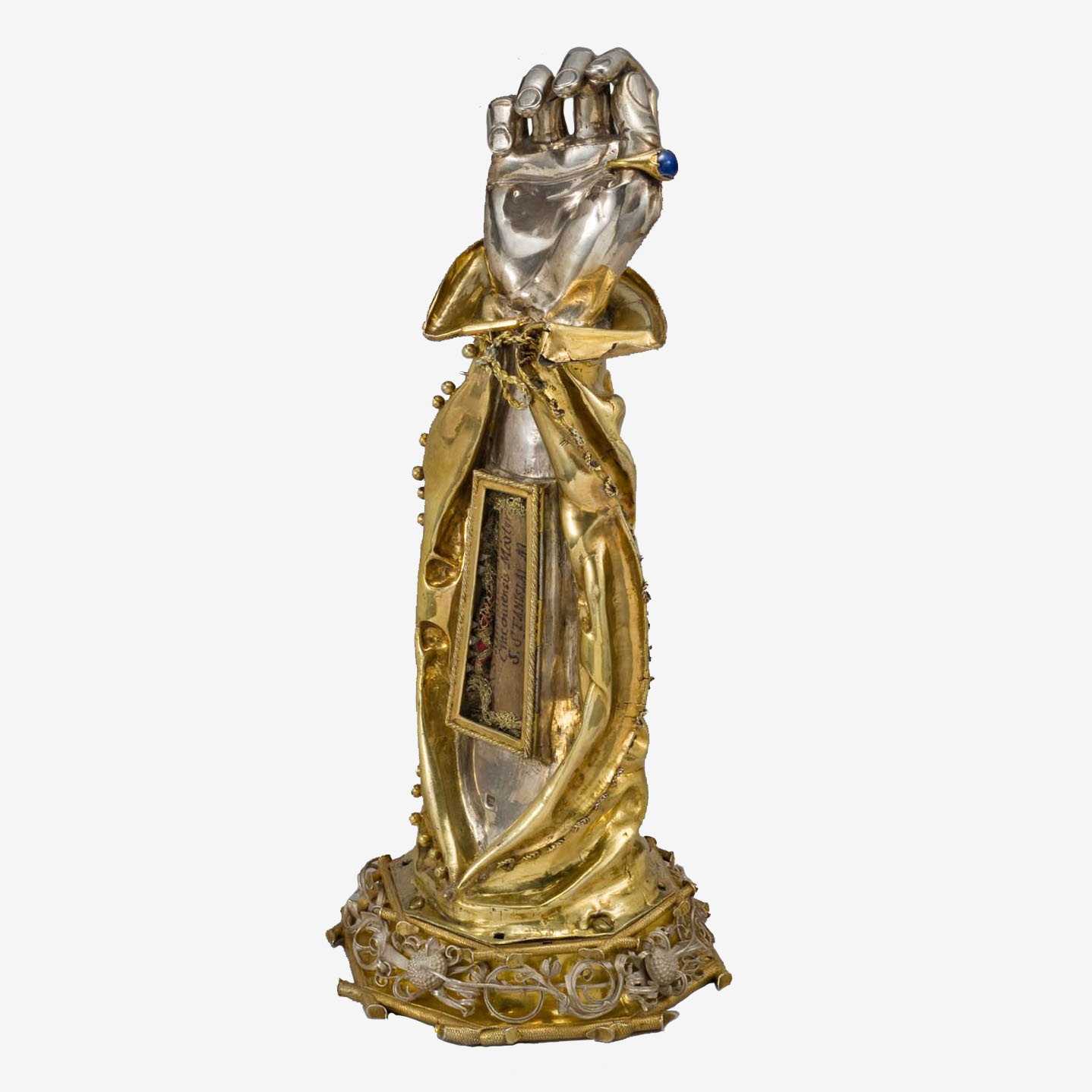
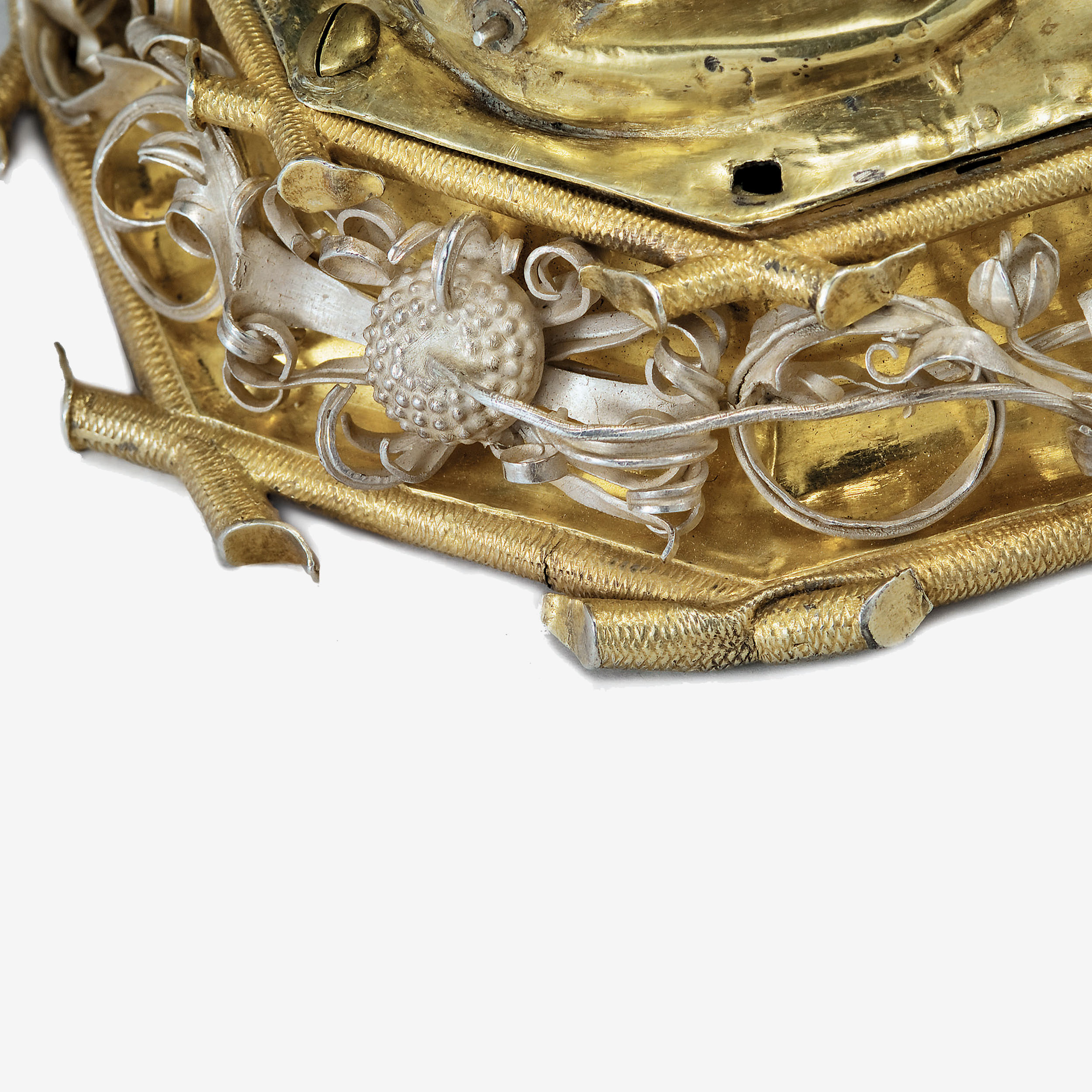
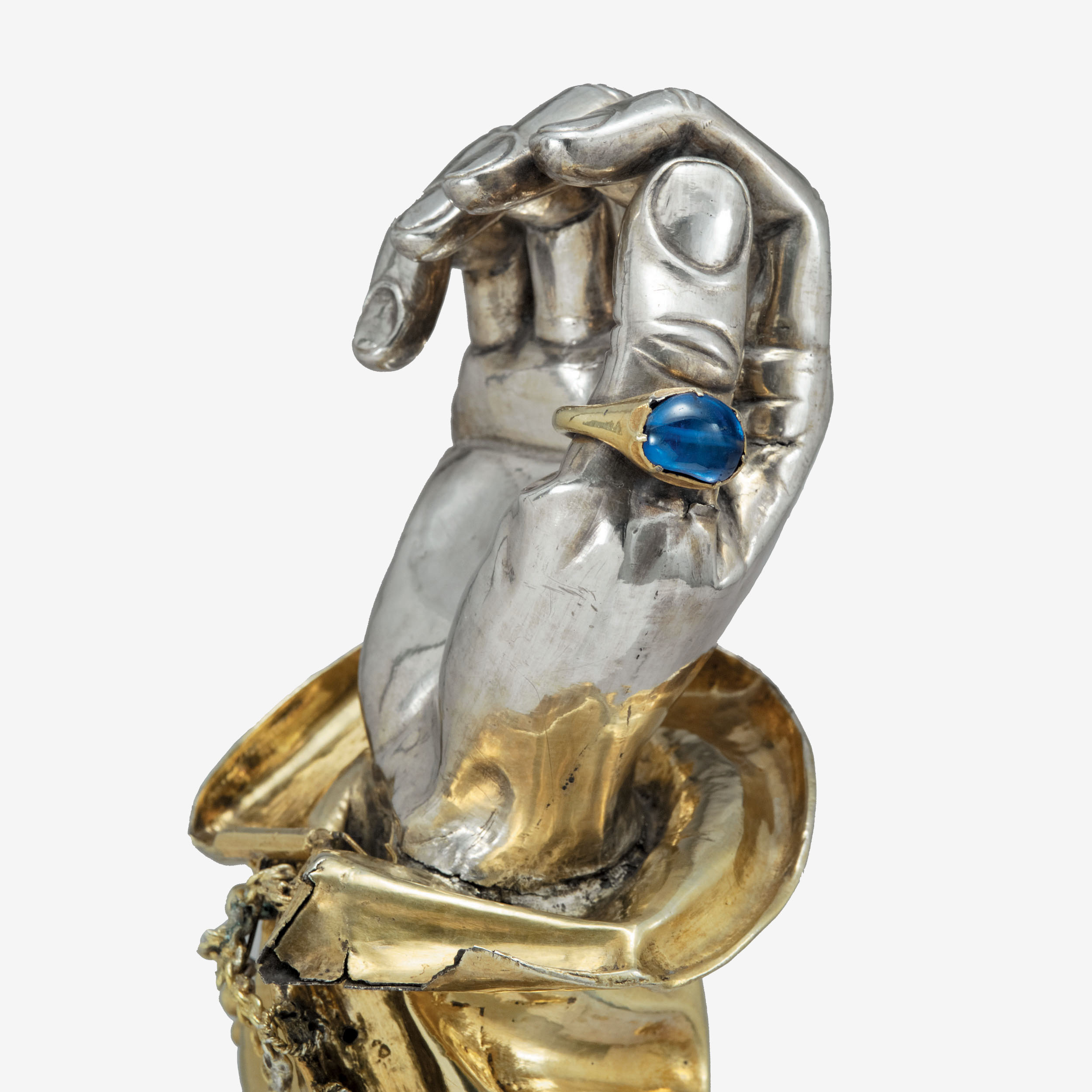
The chapel of the Cathedral’s titular saint also houses the most valuable treasure of Vilnius Cathedral, the oldest reliquary in Lithuania—the “Hand of St Stanislaus.” It belongs to the so-called “speaking” type of reliquaries, whose form reveals the relic contained within: a fragment of the hand bone of St Stanislaus, Bishop of Kraków. It is believed that the sapphire ring placed on the finger of the reliquary once belonged to a bishop and was donated to St Stanislaus as a votive offering. A document from 1503 records that the reliquary was solemnly displayed publicly in the cathedral twice a year, on the feast days of the holy bishop, on May 8 and September 27.