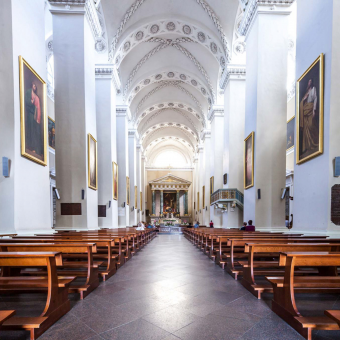
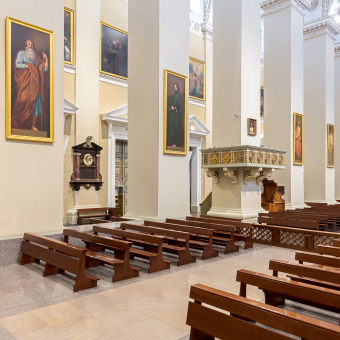
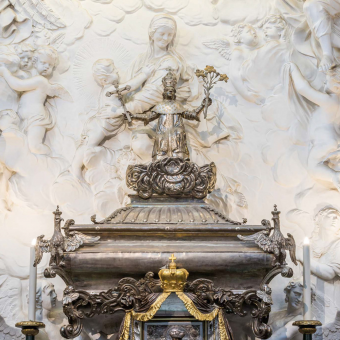
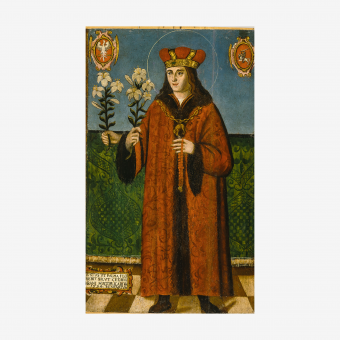

The chapel, founded in the 16th century by Bishop Jonas of the Lithuanian princely family and dedicated to St. Mary Magdalene, was later known as the Bishops’ Chapel, since the crypt beneath it served as the burial place of the bishops of Vilnius Cathedral. For a long time, the Blessed Sacrament was kept in the tabernacle on this chapel’s altar, and this title therefore also became established.
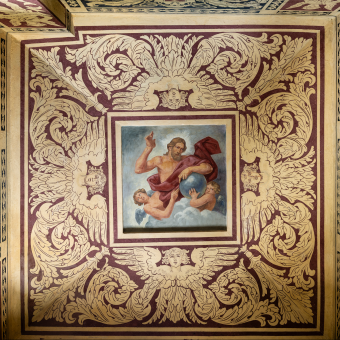
On the ceiling of the chapel there is a fresco depicting Christ blessing all the worshippers, flanked by two angels. At the beginning of the 20th century, the chapel was decorated with figures of angels, Eucharistic symbols, and monograms of Jesus Christ executed in the sgraffito technique. The author of these works was Jurgis Hoppenas.
An epitaph dedicated to Bishop Antanas Pranciškus Audzevičius (1833–1895) is installed on the eastern wall. On a white marble slab, a Latin text is carved in gilded letters, with the monogram—an abbreviated form of Christ’s name—below it. Above the slab are a crossed bishop’s staff and a cross, and higher up, in a niche, stands a marble bust of the bishop. Above the altar hangs an 18th-century painting “St. Thomas” by an unknown artist.
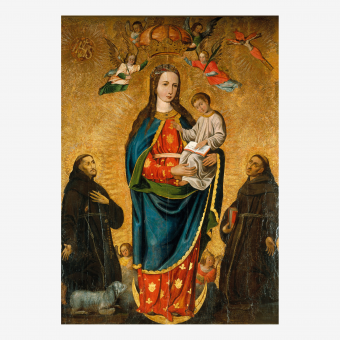
The highlight of the chapel is the painting "Our Lady of St Michael", which is more usually called "The Madonna of the Sapiehas". This image of the Blessed Virgin Mary with the Franciscan saints Francis and Bernardine has been famous for its miracles since the 16th century. Formerly kept in the Bernardine Church, the painting later belonged to the Bernardine convent’s Church of St Michael the Archangel. The name "The Madonna of the Sapiehas" refers to the name of the family who endowed the convent. Miracles worked in the presence of the painting were recorded, and on 8 September 1750 the image was decorated with crowns sent by Pope Benedict XIV (the frame and the crowns have not survived). It was the fourth holy image in the Grand Duchy of Lithuania to be crowned (and the second oldest in Lithuania today).
In 2020, through the efforts of the Cathedral community, the crowns of Our Lady and Infant Jesus were restored and adorn the painting again.
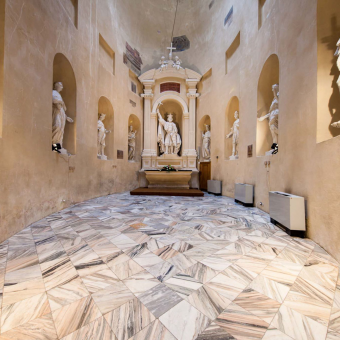
St Vladislaus was the king of Hungary and Croatia who lived in the 11th century and became the patron saint of Hungary. Jogaila, the ruler of Lithuania and Poland, chose Vladislaus as his baptismal name. That is why when Jogaila built Vilnius Cathedral in 1387 it was decided to name it after both St Stanislaus and St Vladislaus.
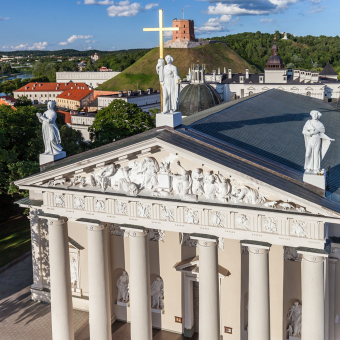
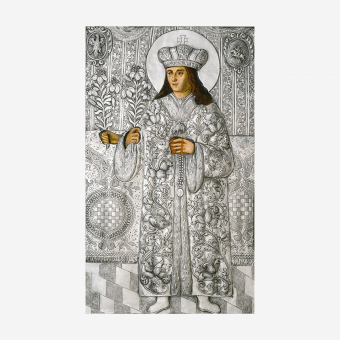
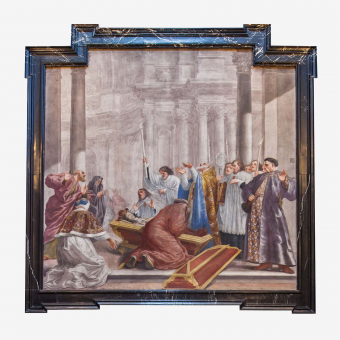
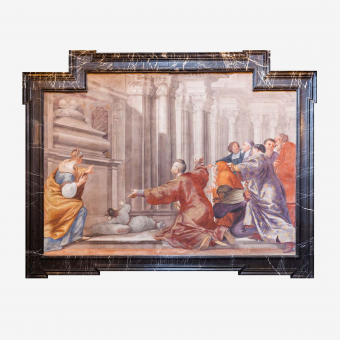
Wawrzyniec Gucewicz designed the elliptical Chapel of St Ladislaus (formerly the Chapel of Bishop Abraham Woyna) in the last major remodelling of the cathedral. It used to have mural paintings, of which only fragments can be seen today. The Latin inscriptions that have survived beside the chapel’s altar reveal the theological meaning of the paintings: Zelus (zeal) and Fides (faith). The altar was built in the mid-19th century, and the niche holds a massive plaster sculpture of St Ladislaus holding a cross (1861–1863, by the sculptor Henryk Dmochowski). Until 1905, this sculpture was covered up, by order of the Imperial Russian authorities, as a manifestation of active Catholic missionary work. The chapel’s Latin dedication can be seen in the fresco above the statue of King Ladislaus.
At Christmas, a nativity scene is displayed in the Chapel of St Ladislaus, and a procession with the Blessed Sacrament is conducted to the chapel on Maundy Thursday.
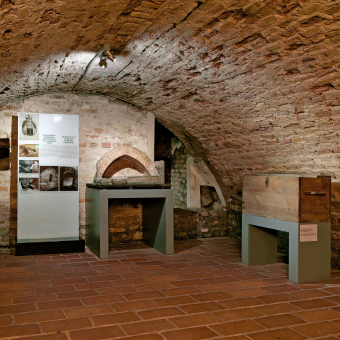
For many centuries the crypts beneath the cathedral were used to bury prominent nobility, rulers, bishops and Chapter members of the Grand Duchy of Lithuania. The most famous of them were Vytautas the Great, Alexander I Jagiellon, and Barbara Radziwiłł. The historic walls of the Cathedral, crypts, and one of the oldest frescos in Lithuania can be seen in the underground exhibition.
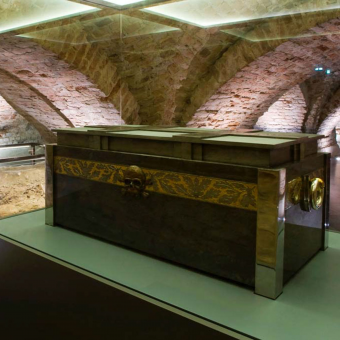
Vytautas was the first ruler of Lithuania to be buried in Vilnius Cathedral. He contributed to the reconstruction and decoration of the church.1930 was the year when 500 years since Vytautas death was commemorated. It was hoped that by the time the remains of the grand duke would be recovered and transferred into the newly made sarcophagus. In fact, though, the search for Vytautas remains has not stopped yet.
Sarcophagus for the remains of Vytautas the Great. Czechoslovakia, 1930. National Museum of Lithuania
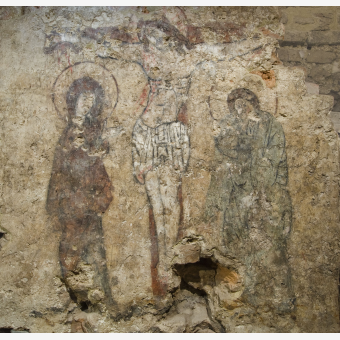
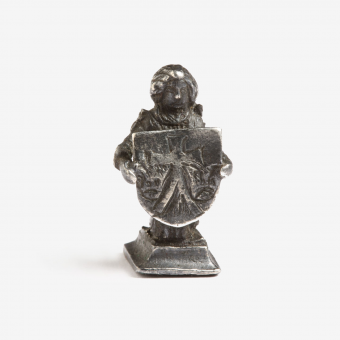
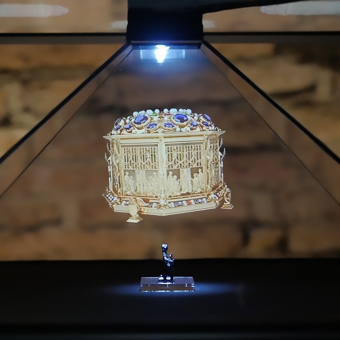
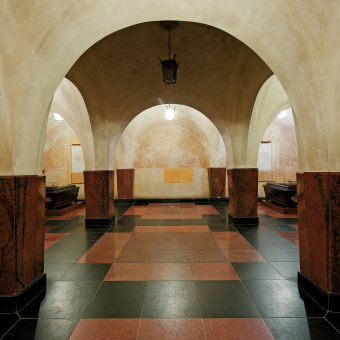
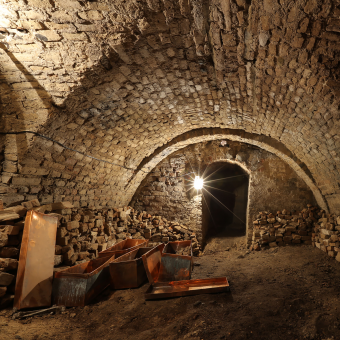
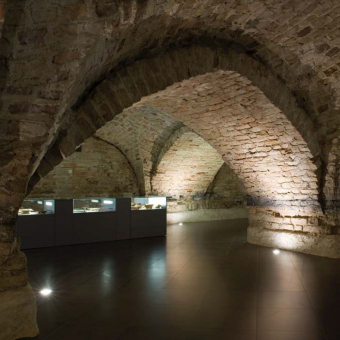
Since 2019, new routes are open to visitors at the crypts of Vilnius Cathedral in the northern part of the cathedral provide an opportunity for visitors to learn about and see spaces that for years had been literally inaccessible, bricked up and closed off. Visitors taking the extreme tour will be able to see some of the oldest masonry in Lithuania, remains of a 13th-14th century tower and staircase, invaluable historic masonry of Jogaila and Vytautas’s cathedral, crypts and mausoleum that harken back to numerous different burial customs, walls that evidence the cathedral’s reconstruction, , an 18th century drainage system, Gothic bricks and other valuable items arranged over a rather large area of 120 square meters under Vilnius Cathedral.
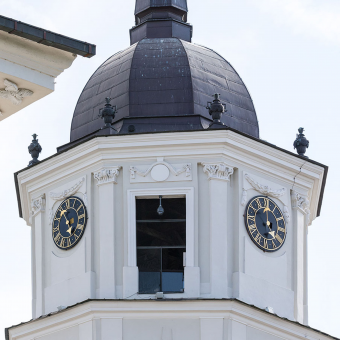
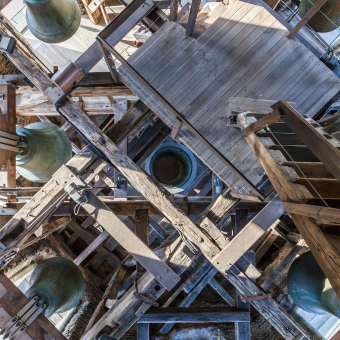
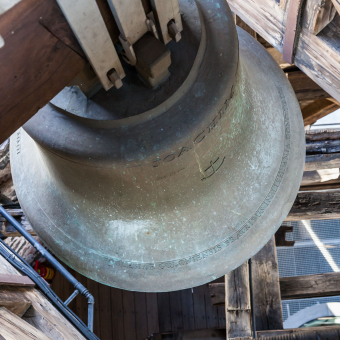
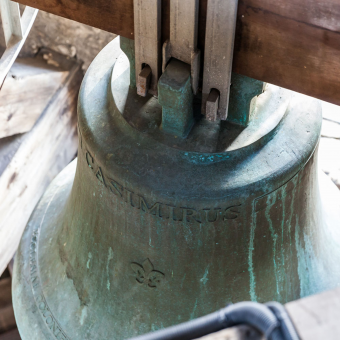
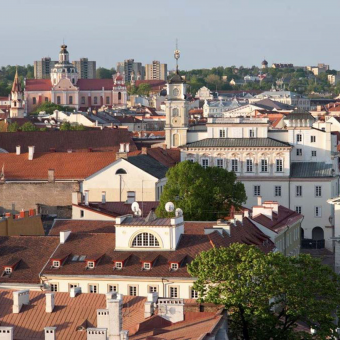
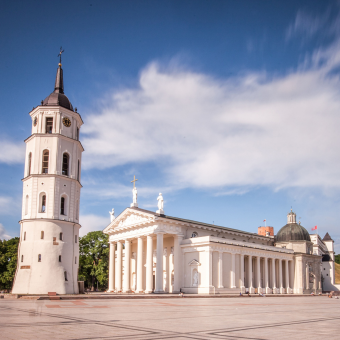
The Bell Tower is an important part of the complex comprising Vilnius Cathedral Basilica and the Lower and Upper Castles and the symbol of the city. The history of Bell Tower dates back to the middle of the 13th century. It acquired its current appearance in the early 19th century. The oldest clock in the city shows time in the upper part of the structure; the tolling of the bells invite people to Holy Mass, and an unexpected panoramic view of Vilnius opens out.
During the Soviet times a decision was made to install a carillon in the Cathedral Bell Tower. Bells of various sizes were brought here from closed churches in Lithuania. But despite drilling, milling and grinding, the efforts to tune the bells failed. In 2009 they were restored in the workshop of the Archdiocese of Cologne. Some of the bells have been returned to the churches from which they were taken, others are on display in the Bell Tower.